

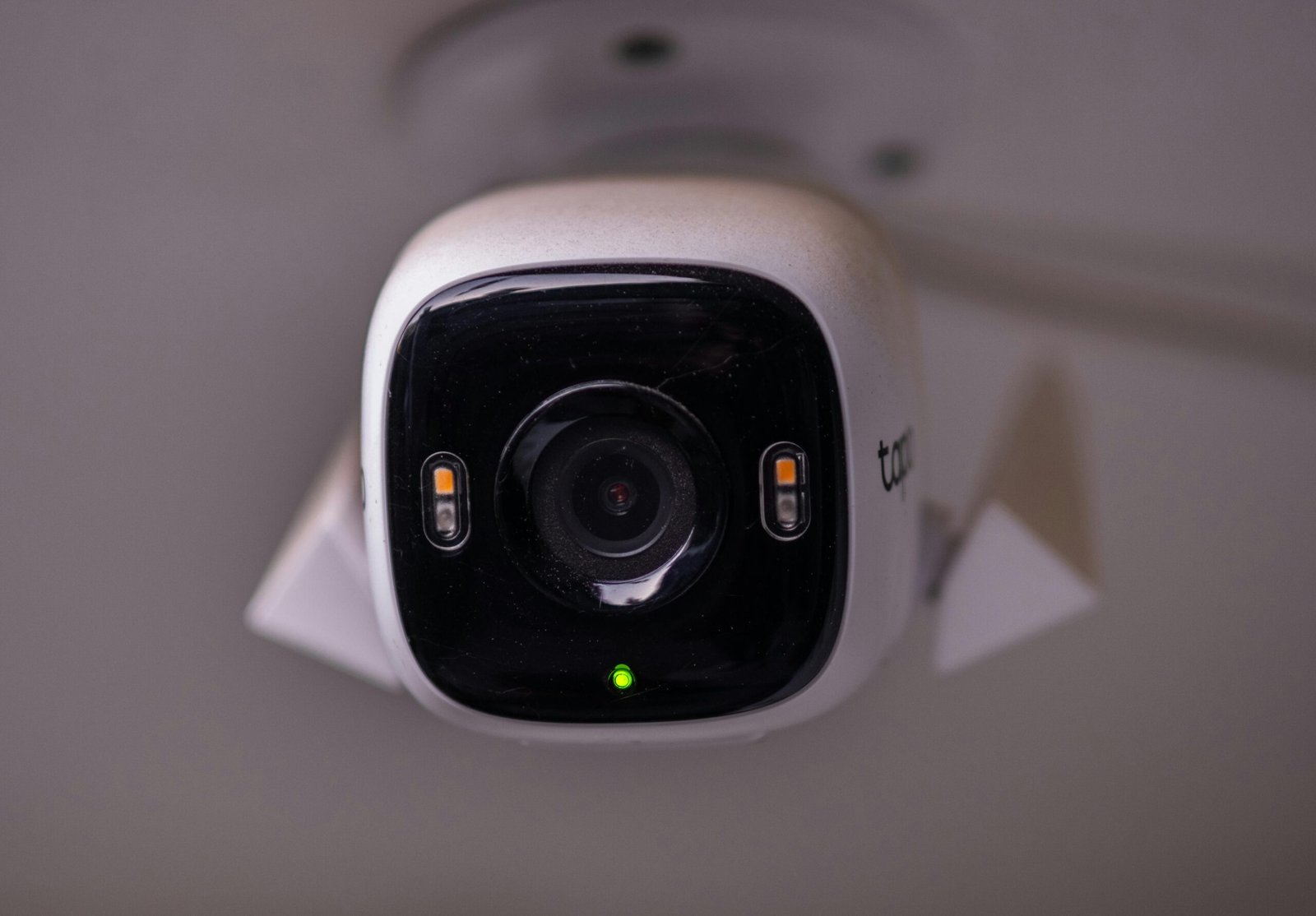
I’ve noticed that many homeowners in Kenya are still installing analog CCTV cameras. There’s nothing inherently wrong with analog CCTV systems, but the models commonly found in Kenya are outdated and no longer used in those superpower nations— guess that’s why they have been dumped in our backyard.
This matters because the main purpose of surveillance cameras is to enhance the security of your home, deterring potential thieves and letting you know who’s on your compound in real time. That’s why video surveillance companies are increasingly adding new features to improve functionality and convenience.
However, as you may have noticed from burglary videos that have been circulating on TV and social media, many CCTV cameras in Kenya are just terrible. While people are installing them, for most, they are merely a façade of security, as you can barely recognize your neighbor or a friend five feet away from the camera.
Beyond helping you find your dream home, Josfa Homes aims to guide you with lifehacks to make your home as comfortable as possible. Security is one of these hacks, and the first topic I’ll be sharing is crucial tips to help you choose a functional and reliable CCTV camera system— you know, something that can deter burglaries and assist in investigations if incidents occur.
Factors to Consider When Choosing CCTV Cameras for Your Home
As I just mentioned, many CCTV cameras in many Kenyan homes are outdated analog models that were discontinued years ago. These analog systems rely on older video surveillance technology that processes captured video at the DVR (the video recorder box your cameras connect to). I won’t get into all technical details, but the resulting video stored in the recorder often has low, unusable clarity.
Worse, these outdated analog CCTV cameras in Kenya record at low frame rates, as they still use the old coaxial cables designed for low bandwidth and data transmission. They are the cameras, a standard 1080p HD resolution is limited to 7–25 fps, producing choppy videos that lack the crucial details needed to identify people or crucial events.
If possible, we’d recommend an IP CCTV camera as it uses modern surveillance technology to process your footage. It’s the only model you can expect to enjoy modern features like IVS, smart home automation, and stand-alone plug-and-play installation.
Below are a few other factors to consider when choosing a surveillance camera system for your home…
Types of CCTV Cameras
CCTV cameras come in various types, with each designed for specific applications:
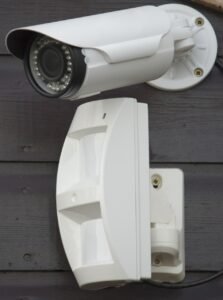
- Bullet CCTV Camera: This is a type of surveillance camera that features a long, cylindrical, barrel-like design. It is generally ideal for outdoor installation, as its appearance can seem odd indoors. The camera can be manually rotated around its mounting axis to point in your desired direction or angle.
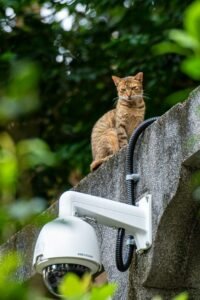
- Dome CCTV Camera: This is a type of security camera that has a circular base with a dome-shaped, transparent cover at the front. Its sleek, discreet design allows it to blend seamlessly into indoor or outdoor environments. However, once mounted, the camera’s position is fixed, preventing manual rotation to adjust direction or angle.
- Turret CCTV Camera: This is a type of security camera that resembles a dome camera, but its circular base is designed like a socket, housing a “ball” of a camera lens. Once installed, the camera lens can be manually rotated to point in a different direction or angle, thereby offering greater flexibility than a dome camera.
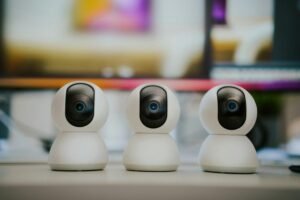
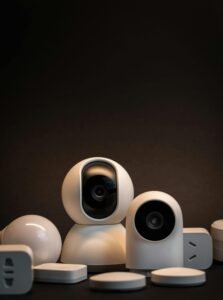
- PTZ CCTV Camera: This is an advanced version of the turret camera, featuring PTZ (Pan, Tilt, Zoom) features via its motorized lens ball. You can control the camera’s pan, tilt, and zoom functions using a dedicated system, such as a recorder, joystick controller, or smart device (e.g., phone or tablet). Alternatively, you can program it to rotate automatically upon detecting movement or sound. The camera’s optical zoom functionality enables close-up views without distortion.
- PT CCTV Camera: This is a simplified version of the PTZ camera, featuring only mechanical pan and tilt (PT) functionality. It basically features a circular base with a motorized lens that supports only these two functions (panning and tilting) and digital zoom, as the lens cannot be physically adjusted.
- Varifocal CCTV Camera: This is a type of surveillance camera that features an adjustable lens that allows you to change the focal length, switching between a wide-angle view (ideal for capturing large scenes) and a narrow-angle view (for high-quality, detailed images). While most varifocal cameras require manual adjustments, some models include motorized lenses for remote focal length changes.
Video Quality of CCTV Cameras
Like the camera on your smartphone, the quality of a CCTV camera’s footage is critical, choosing the highest resolution you can get. Higher-resolution cameras deliver clearer images to your viewing device, whether it’s a TV, PC monitor, laptop, tablet, or phone.
Below are the five most common video resolutions for consumer CCTV cameras currently available in Kenya:
- 4K Ultra-HD: Captures video at 3840 x 2160 pixels, providing a frame with 8,294,400 pixels (approximately 8MP quality).
- 2K Super-HD: Produces video at 2560 x 1920 pixels, offering a frame with 4,915,200 pixels (approximately 5MP quality).
- 2K Quad-HD: Delivers video at 2560 x 1440 pixels, yielding a frame with 3,686,400 pixels (approximately 4MP quality).
- 2K Full-HD: Records video at 2304 x 1296 pixels, providing a frame with 2,985,984 pixels (approximately 3MP quality).
- 1080p Full-HD: Generates video at 1920 x 1080 pixels, resulting in a frame with 2,073,600 pixels (approximately 2MP quality).
- 720p HD: Produces video at 1280 x 720 pixels, offering a frame with 921,600 pixels (approximately 1MP quality).
Don’t be misled by the term “HD” (high definition) on packaging or product descriptions. When purchasing CCTV cameras for your home, confirm with the seller whether the resolution is 720p HD, 1080p Full-HD, 2K Full-HD, 2K Quad-HD, 2K Super-HD, or 4K Ultra-HD. The latter offers the highest quality, enabling digital zoom without significant pixelation.
I’ve tried to break this down further below….
| Quality of the CCTV Camera | Native Video Resolution | Comparing Video Resolution |
| 4K Ultra-HD (UHD) | 3840 x 2160p (8,294,400 pixels) | 1.69 times the 2K SHD |
| 2K Super-HD (SHD) | 2560 x 1920p (4,915,200 pixels) | 1.34 times the 2K QHD |
| 2K Quad-HD (QHD) | 2560 x 1440p (3,686,400 pixels) | 1.24 times the 2K FHD |
| 2K Full-HD (FHD) | 2304 x 1296p (2,985,984 pixels) | 1.44 times the 1080p |
| 1080p Full-HD (FHD) | 1920 x 1080p (2,073,600 pixels) | 2.25 times the 720p |
| 720p HD (HD) | 1280 x 720p (921,600 pixels) | Baseline (absolute) |
Night Vision of the CCTV Cameras
To ensure your CCTV cameras provide reliable surveillance around the clock, you must consider excellent night vision capabilities as well. The three critical attributes to consider here are:
- Type of Built-in Infrared (IR) Night Vision: CCTV cameras use either 850nm IR, which emits a visible red glow, or the stealthier 940nm IR, which is completely invisible to the human eye. The 850nm IR produces brighter nighttime footage and offers a longer detection range. Conversely, the 940nm IR is ideal for covert surveillance, like those hidden spy cameras in hotels or Airbnbs, but it captures less vivid images and has a shorter range.
- Range of Infrared (IR) Night Vision: Ensure the CCTV camera you pick has an IR night vision range that adequately covers your desired area. While most cameras are limited to approximately 20 feet, some can detect objects up to 1,000 feet (300+ meters) away.
- Advanced Color Night Vision Mode: Some CCTV cameras feature color night vision, allowing them to record in color even in low-light conditions. This is valuable for identifying critical details, such as faces, tattoos, vehicle colors, or license plates. However, the nighttime clarity depends on the type of color night vision and the image sensor of the camera.
Audio Features of the CCTV Cameras
Modern CCTV cameras now include built-in audio capabilities. I’d recommend you take advantage of these features, as they can be useful during the investigation of an incident, two-way communication, or deterrence:
- Microphone: Captures real-time and recorded audio, adding background sounds to your surveillance footage.
- Speaker: Allows you to communicate verbally with or deter someone on the other side of the camera.
- Two-Way Talk: Enables seamless, walkie-talkie-like communication with individuals near the camera.
- Siren: Emits a loud warning sound to scare off intruders, which you can activate manually or set to trigger automatically after detecting motion or sound
- Automated Responses: Some advanced CCTV cameras, particularly video doorbells with built-in camera functionality, allow you to program custom verbal responses for specific situations.
Intelligence of the CCTV Cameras
CCTV camera technology has come a long way, as now we have options with smart AI (artificial intelligence) to assist with your security. In fact, it’s one of the fields that were first to adopt AI, which in my former company we’d refer to as IVS (intelligent video surveillance).
The primary purpose of the IVS technology is to assist your CCTV in automated detection features, ensuring you only get alerts that matter. Some of the best IVS features you can consider for your home CCTV camera are:
- Person/Human/Humanoid Detection: Triggers the camera upon detecting a human shape.
- Face Detection: Activates the camera when a face is detected (any person).
- Facial Recognition: Alerts you when an unrecognized face (not stored in the camera’s database) is detected.
- Vehicle Detection: Triggers the camera upon detecting a vehicle’s shape.
- License Plate Capture/Recognition: Activates the camera when it detects a specific license plate, whether whitelisted, blacklisted, or unregistered.
- Pet/Animal Detection: Triggers the camera based on an animal’s shape, motion, or heat signature.
- Package Detection: Alerts you when a package is left or removed in a designated area.
- Intrusion Detection: Activates the camera when a person or vehicle enters a predefined zone.
- Obstruction Detection: Triggers an alert if the camera’s lens is blocked.
- Sound Detection: Activates the camera when specific sounds, such as a child crying, a dog barking, or voices, are detected.
- People Counting: Tracks the number of individuals entering your property within a specific time frame.
Smart Automation of the CCTV Cameras
Beyond IVS, modern CCTV cameras support smart home integration, allowing you to incorporate your camera into a unified ecosystem controlled via a central hub. For example, you can manage cameras with built-in Alexa compatibility on devices like the Echo Show or Fire TV Stick, including control with simple voice commands.
Besides CCTV cameras, Alexa allows you to manage other smart devices in that ecosystem, such as TV features, lights, plugs, and smart locks. It allows management of smart appliances like thermostats, robot vacuums, and humidifiers, but these are less common in Kenyan homes.
Tip: Other smart home integration platforms compatible with CCTV systems include Google Home (or Google Assistant), Apple HomeKit, and Samsung SmartThings.
Recording Modes of the CCTV Cameras
Yet another feature to consider when choosing CCTV cameras for your home is the recording mode that suits your needs. The four primary recording modes are:
- 24/7 Continuous Mode: Records every second, minute, and hour, ideal for comprehensive surveillance when you don’t want to miss any activity.
- Event Recording Mode: Records only when triggered by motion or sound detection.
- Scheduled Recording: Records based on a preset schedule, allowing you to specify the time, duration, and recording method (continuous or event-based).
- Manual Recording: Starts and stops recording when you manually press the start or stop button.
It’s worth mentioning storage requirements of CCTV cameras depend on factors such as video quality, frame rate, audio format, recording duration, and compression codec. The two common video compression standards are:
- H.264 Codec: An older protocol supported by most CCTV systems, but less efficient, resulting in larger file sizes that demand more storage space and higher network bandwidth.
- H.265 Codec: A modern protocol using advanced compression technology, producing smaller file sizes that require less storage and lower bandwidth for transmission.
Durability of the CCTV Cameras
When protecting your home with CCTV cameras, the last thing you want is to have to replace them every month or even yearly. Therefore, invest in high-quality products that will provide long-lasting performance.
When considering the durability of a CCTV camera, there are two key aspects to focus on:
- Overall Construction: Choose a well-established brand as you can never go wrong on craftsmanship. The surveillance camera you select should feature either a metal or rugged plastic construction. If your budget allows, consider an IK10-rated vandalproof CCTV camera, which is designed to resist tampering and endure wear and tear over time.
- Weather Protection: Select a CCTV camera that is suited for its intended environment. If you are installing the cameras outdoors, ensure they are designed to withstand extreme weather conditions, including high temperatures, rain, and dust. For example, cameras with metal housings and IP68 rating are highly resistant to UV rays from the sun, dust-tight and can operate even in the harshest, wettest conditions.